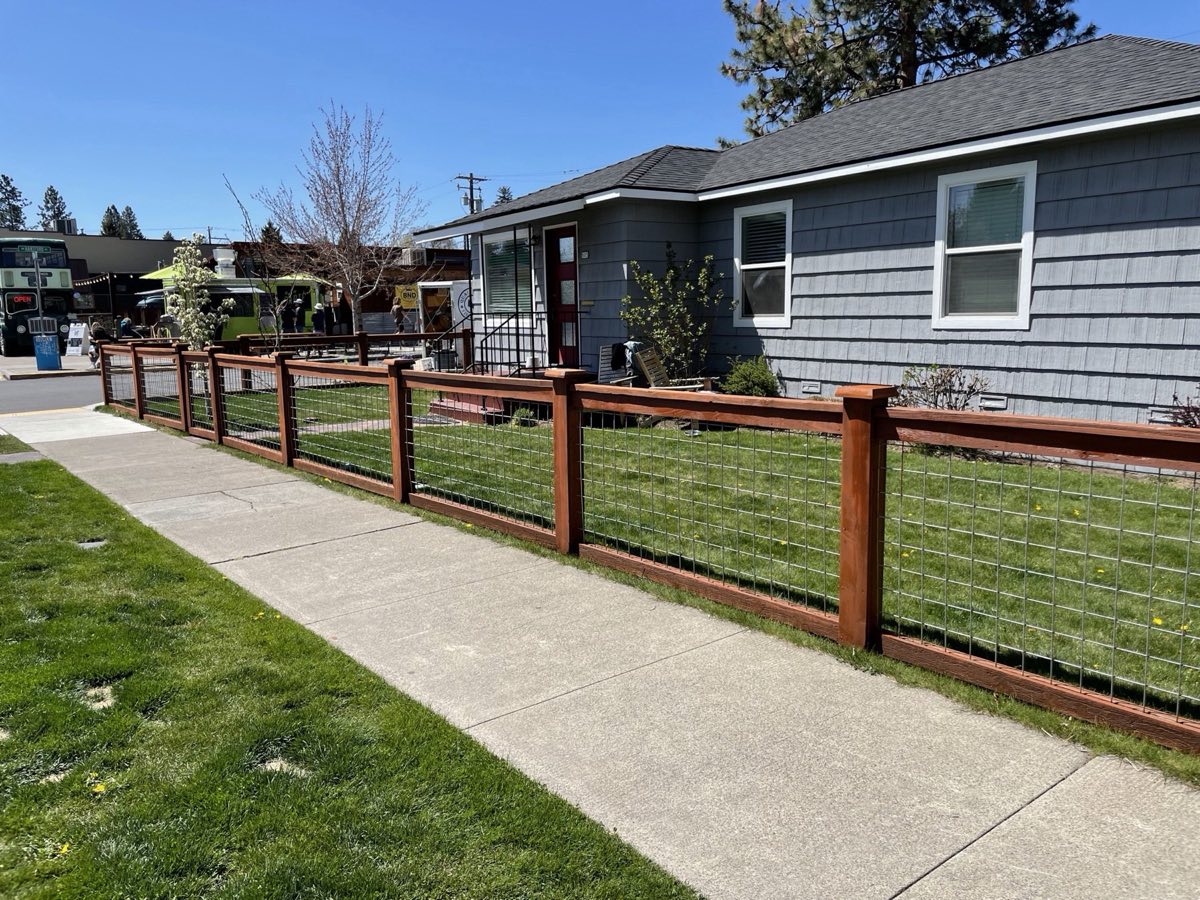
Bend's older west-side homes often carry several layers of previous paint, which changes the prep entirely. Feathering those edges takes longer than a straight repaint, and we tell homeowners up front when a surface will not come back perfectly flush.
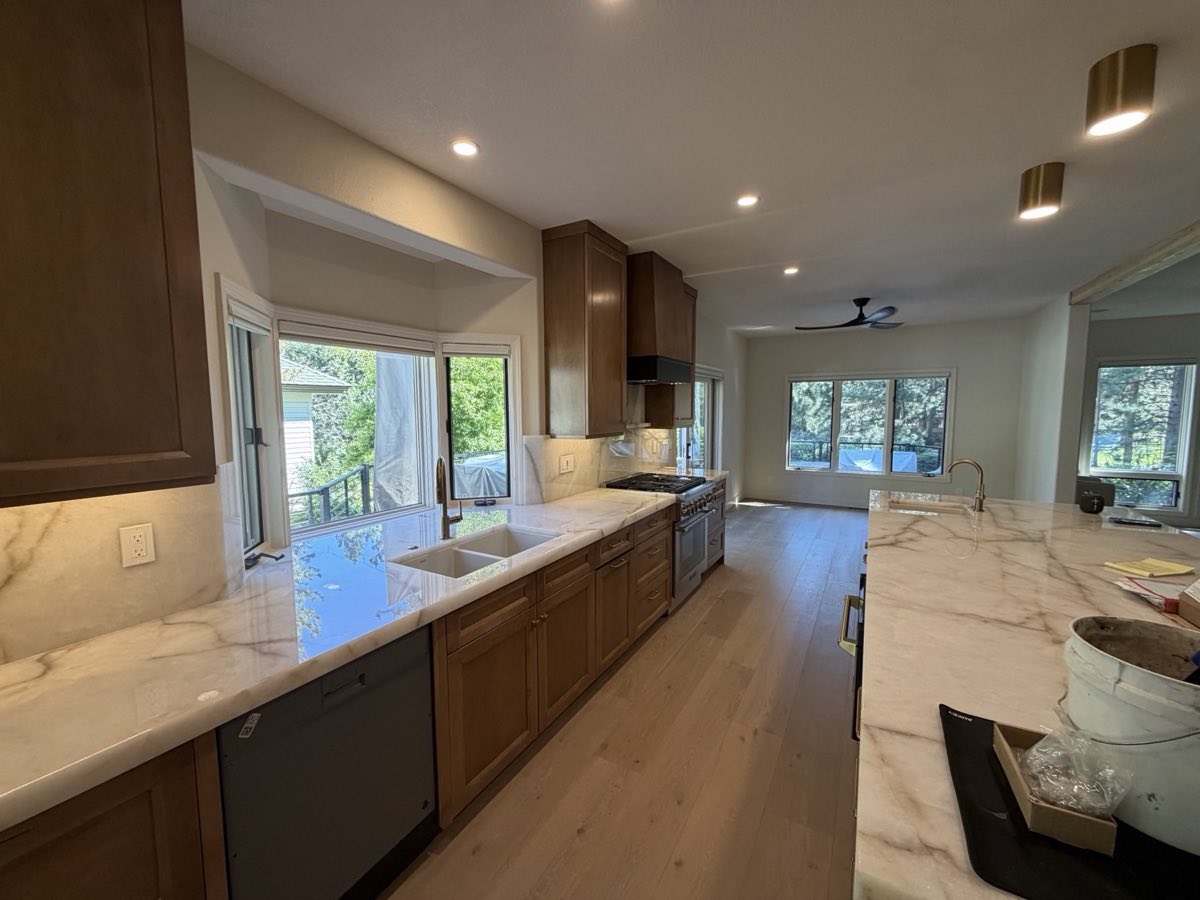
Not every remodel gets new windows. On a remodel in Mountain High, out by the golf course, we repainted the house wall-out including the millwork, but the original stained windows had to stay because replacing them was not in the budget. We converted them to paint instead, to match the trim that was already painted elsewhere in the house: every sash degreased and scuff-sanded, two coats of primer with a sanding pass between them, then two finish coats. It costs a fraction of replacement, and it is the reason the trim reads as one house rather than two different eras.
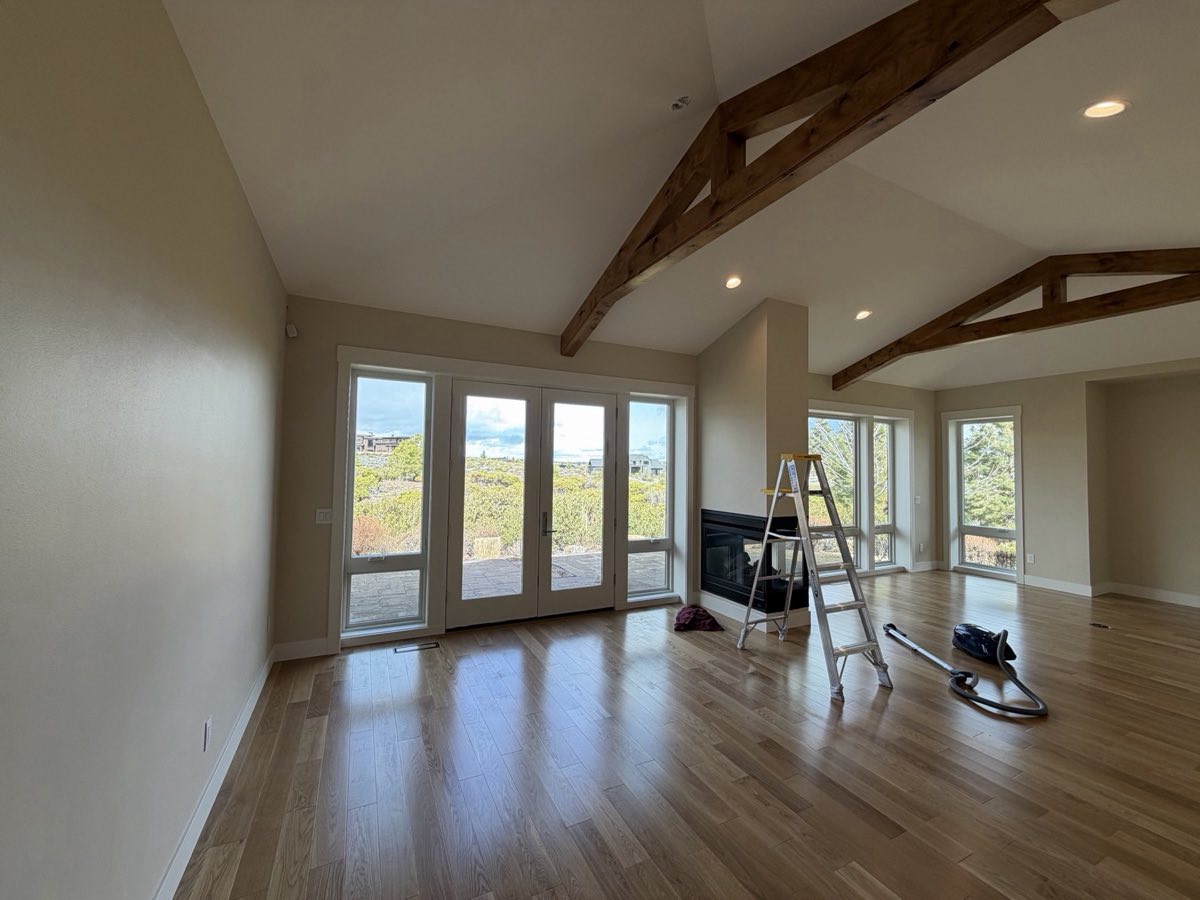
A second Mountain High project was a full-scale remodel, interior gutted to the studs with all new drywall and millwork. That one ran as a single color in three sheens: flat on the ceilings, matte on the walls, satin on the trim and doors. One color in three sheens keeps a remodel reading as one house instead of a collection of rooms. The wall-out took four days and the trim pack five.
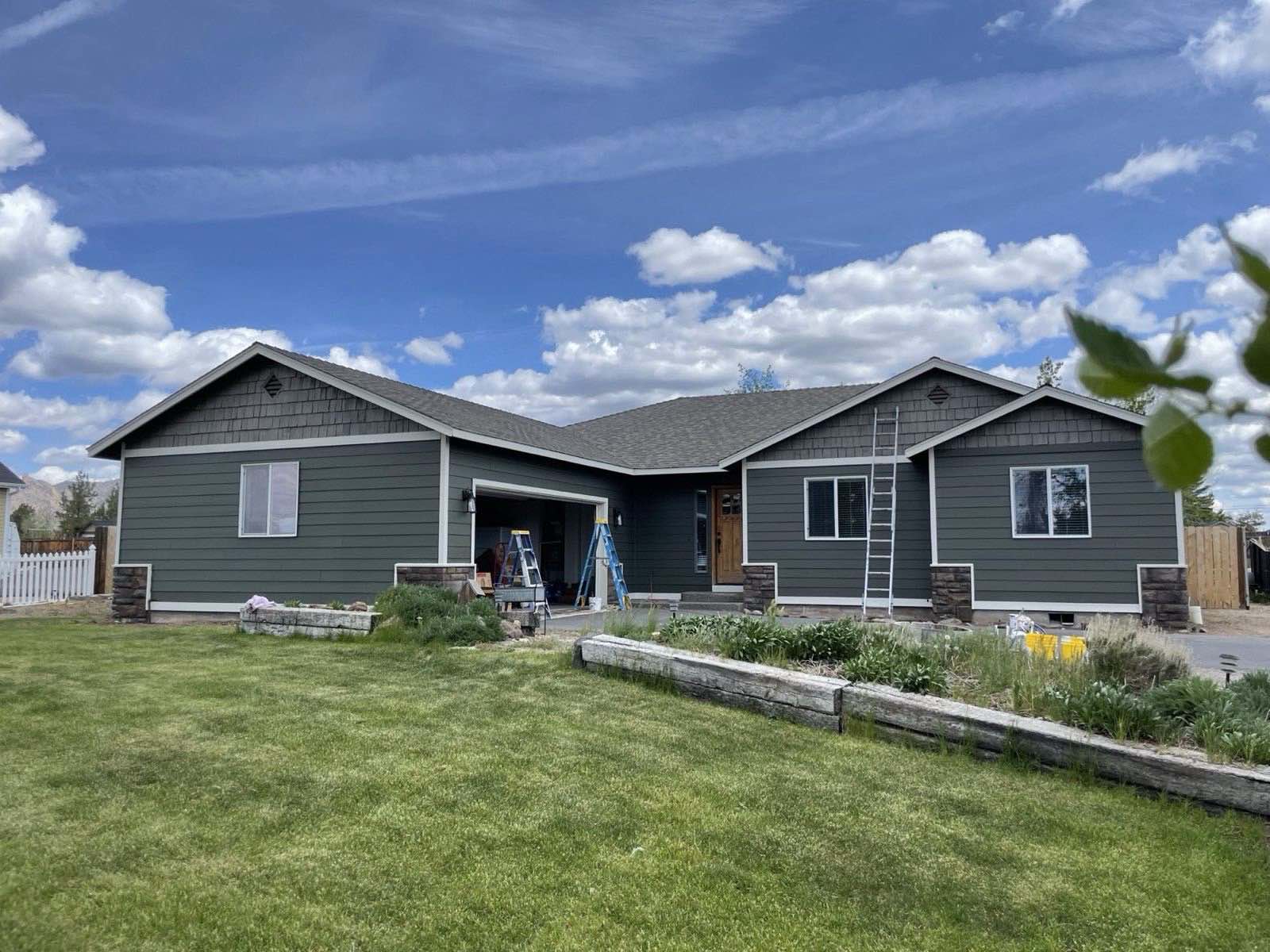
Newer construction on the east side tends to be builder-grade paint on hardboard or LP siding. That holds up fine for about seven years before the south and west elevations start chalking.
Snow load and freeze-thaw are the two things that decide whether caulk lines survive. We check every window and trim joint before quoting an exterior.